
By Perry Jones, Piney Wood Model A Ford Club
Hickory Stripe is known as the workwear worn during the Model A era and
most recognizably worn by Rail Road Workers. It is not to be confused with ahickory switch, which some of us may be more familiar with (ouch!)
The hickory stripe traces its roots back to late 19th and early 20th century America, where it became synonymous with railroad workers. The fabric was most commonly used for engineer and conductor overalls, jackets, and caps – clothing designed for long days and hard work.
The name itself is thought to come from hickory wood, a material prized for its toughness and resistance to wear. Much like the wood, hickory stripe fabric was
chosen for its durability. Woven most often from hardwearing cotton twill, it stood up to repeated use, frequent washing, and the unforgiving conditions of industrial labor.
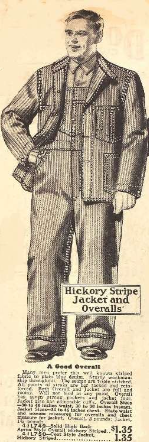 Hickory stripe became closely linked with the American railroad industry in the early 20th century. Railroad engineers, brakemen, and conductors wore hickory stripe overalls while operating their coal-fired locomotives. In 1920, to help promote its hickory stripe overalls, the OshKosh Overall Company (formerly OshKosh Clothing and Manufacturing Co.) began making engineer caps in the pattern. The famous hickory stripe engineer cap became a defining piece of railroad worker attire, further cementing the fabric’s place in American
labor history.
Beyond durability, the stripe served a practical purpose. The alternating light and dark lines helped disguise dirt, grease, and soot which was no small consideration for workers spending their days around machinery. Unlike solid fabrics that showed wear quickly, hickory stripes aged gracefully, developing character rather than simply looking worn out.
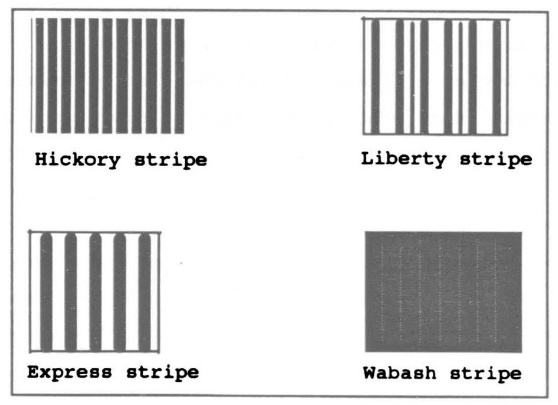
Several other striped patterns became popular in the early 1900’s and were given special names that were used through the 1940’s. Hickory stripe, referring to narrow regular stripes, appeared around 1906. As defined in Fairchild’s Dictionary of Textiles. Fancier versions, such as Liberty or Victory stripes, “have a pattern of white stripes of various widths on a solid blue ground.” The Liberty stripe name was first evident around 1934, perhaps in an effort to spur feelings of nationalism in times of widespread poverty and economic disruption.
The names Wabash stripe and Express stripe were used in 1914, but Wabash stripe was not found in other references, as the Express stripe was. The latter two names evoke thoughts of railroads such as the Wabash Cannonball and the many “express” lines that were developing in the early 1900’s.
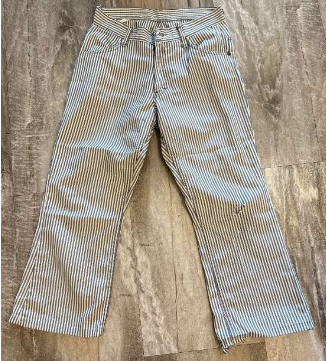
One of the most interesting expansions of hickory stripe came with children’s workwear. Brands like OshKosh B’Gosh recognized that many children, especially those growing up on farms and in rural communities, needed sturdy clothes for outdoor play and chores. The company introduced miniature versions of classic work overalls in hickory stripe, often designed to match their parents’ workwear. These garments became a staple of American childhood in the mid-20th century, combining durability with a touch of nostalgia.
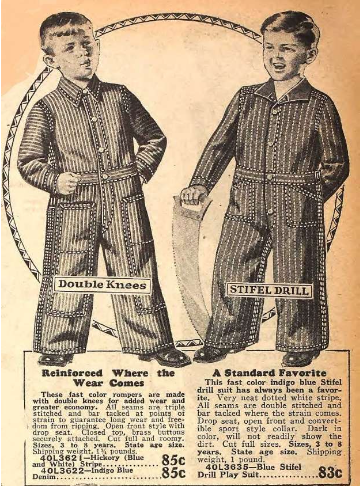
Today, hickory stripe remains a beloved part of both vintage workwear and contemporary fashion. Whether worn as a durable work jacket, a stylish chore coat, or a classic engineer cap, it continues to represent a rich history of craftsmanship, resilience, and timeless design.
References:
- Iowa State University “The Development and use of bib overalls in the United States, 1856-1945”
- Sears and Roebuck Summer 1928
- National Parks Service, Utah
- OshKosk B’Gosh
- Freestone & Field.com