

By Tammie Jones, Piney Wood Model A Ford Club
Historical Background
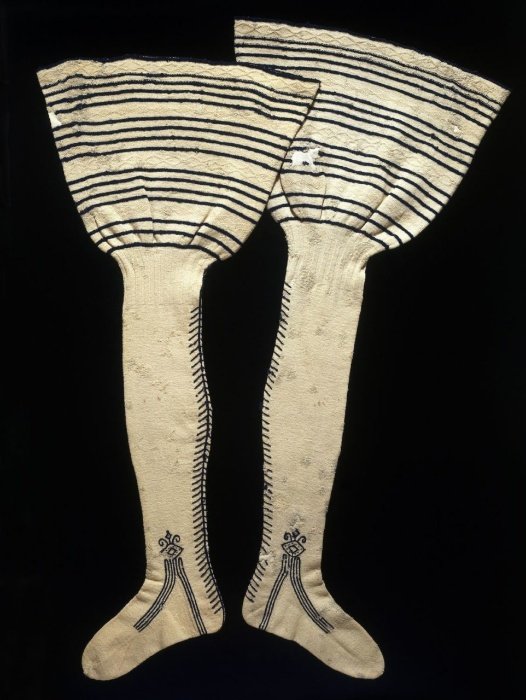
Starting in the 16th century, hosiery started being decorated with small, embroidered, woven or knitted patterns at the ankle. These were referred to as Clox (or Clocked) stockings.
Often, the pattern was bell shaped or floral and it contrasted with the rest of the stocking. The term Clox came from the Dutch klok, meaning “bell” (referring to the shape of the ankle decoration).
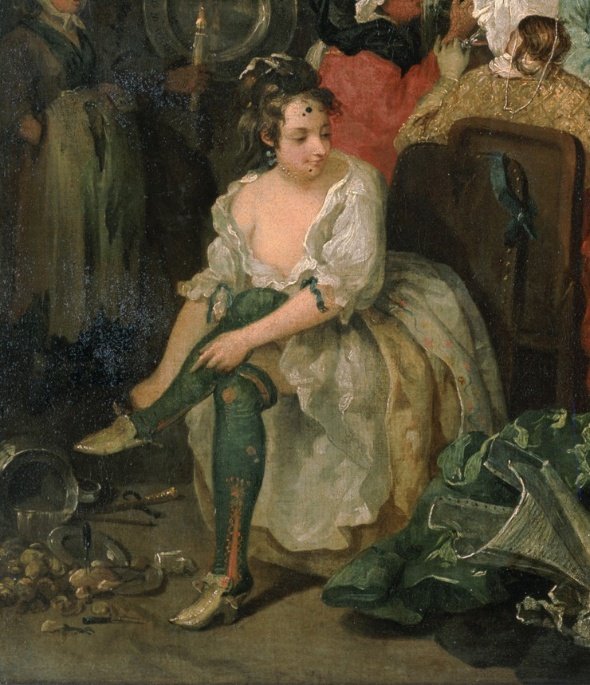
Clocks were worn by both men and women: A pair of men’s clocked woolen boot-hose from the 17th century can be seen in figure 1 below, and a painting of a woman wearing clocked stockings in figure 2.
Men wore clocks on their hose until the early 19th century, when trousers became more common. Women, however, continued to wear them, and still do today.
Model A Era
Between 1928 and 1931, hemlines had begun to shorten from the longer styles of the mid-1920s, and when a woman walked or sat, her ankles were visible. Clock embroidery added a refined detail that could be glimpsed beneath:
- Knee-length daytime dresses
- Afternoon frocks
- Evening gowns
- Sportswear with shorter skirts
Because skirts were slightly shorter than earlier in the decade, the decorative ankle became a subtle, sophisticated fashion statement.
During 1928–1931, clock stockings typically featured:
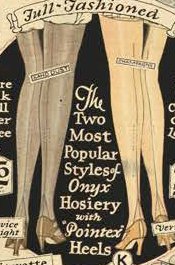
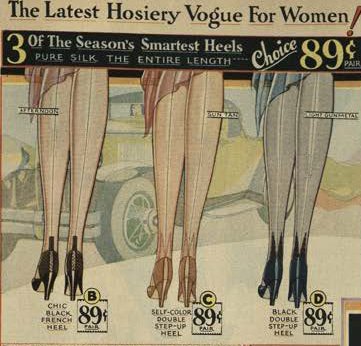
- A sheer silk or rayon stocking with a dark back seam, which was very fashionable.
- Delicate embroidered motifs beginning at the ankle and extending a few inches upward.
- The embroidery was usually placed on both sides of the ankle, though some luxury stockings had elaborate designs on the outer ankle only.
From 1928 to 1931, the most common materials were:
- Pure silk (the luxury choice)
- Artificial silk (rayon), which became increasingly popular because it cost less
- Cotton lisle for more practical daytime stockings, though these were generally less decorative
Nylon stockings did not appear until 1939.
Popular stocking shades changed with clothing fashions and included:
- Nude or flesh tones
- Beige
- Blush
- Champagne
- Dark Brown
- White
- Bright tones like orange
The embroidered clocks were frequently darker than the stocking itself, making them stand out. They consisted of embroidery, metallic threads or matching pastel and dark hues.
The designs evolved with the growing influence of Art Deco:
- 1928–1929: Delicate floral and lace-inspired embroidery remained popular, carrying over from earlier fashions.
- 1930–1931: More streamlined, geometric, and symmetrical motifs reflected the sleek Art Deco aesthetic. Metallic embroidery and contrasting colored clocks also became more common on high-end stockings.
Luxury department stores and hosiery makers often advertised clocked stockings as an elegant accessory for fashionable women, emphasizing that even a small glimpse of an embroidered ankle conveyed refinement and good taste.
By the mid-1930s, simpler stockings gradually became more common for everyday wear, although embroidered clock stockings continued to be available as fashionable dress hosiery for special occasions.


Modern Use
Current clocked silk stockings are produced as fashion accessories, often thigh-high or above the knee, with the clocking pattern on both sides of the ankle or the back of the heel. They are made from blends like 70% silk and 30% nylon, dyed in small batches for unique color variation. These are marketed at retro-inspired and can be worn with modern clothing.
References
- The Victoria & Albert Museum, London
- Sir John Sloanes’s Museum, London
- Kenna Libes published article 2020
- Everyday Fashions of the Twenties, Stella Blum 1981
- Vintage Dancer